
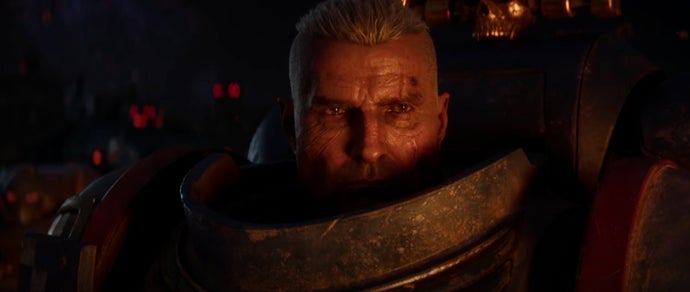
The announcement of Total War: Warhammer 40,000 marks a pivotal moment in strategy gaming history, bringing together two beloved franchises that have shaped the genre for decades. Creative Assembly’s decision to venture into the grim darkness of the far future feels like a natural evolution after their successful partnership with Games Workshop on the Warhammer Fantasy trilogy. The studio has spent years perfecting the formula of combining large-scale tactical battles with strategic empire management, and now they’re applying that expertise to one of the most popular science-fantasy settings in existence.
At Gamescom 2024, journalists and gaming enthusiasts were treated to their first hands-on experience with the upcoming title. Players were able to try three brief scenarios designed to showcase the game’s core mechanics and visual presentation. According to early impressions, the battles are visually stunning thanks to a new engine that brings unprecedented detail to the massive conflicts that define the Warhammer 40,000 universe. The strategic layer also received praise for its innovative approach, featuring miniaturized planets that players navigate to manage their galactic conquest.
Revolutionary Asymmetric Faction Design
What truly sets Total War: Warhammer 40,000 apart from its predecessors is the extreme asymmetry built into its faction system. Creative Assembly has emphasized that each playable race will feel fundamentally different, not just in unit composition but in core gameplay mechanics. The Space Marines, humanity’s elite supersoldiers, exemplify this design philosophy perfectly. These genetically enhanced warriors embody the motto “A Space Marine does not flee” — meaning that when you command these units, traditional retreat tactics may not be available. This forces players to adopt entirely new strategic approaches, emphasizing positioning and commitment over flexibility.
This level of asymmetry represents a significant departure from traditional Total War games, where factions often shared similar underlying mechanics with cosmetic and statistical differences. In Warhammer 40,000, the Tyranid swarm will play nothing like the disciplined Imperial Guard, and the enigmatic Necrons will require completely different strategies than the brutal Orks. Game designers have drawn inspiration from the tabletop game, where each army has unique rules and playstyles that have been refined over nearly four decades of development.
A Legacy of Collaboration
The partnership between Creative Assembly and Games Workshop stretches back to 2016 when Total War: Warhammer first launched. That initial collaboration proved remarkably successful, spawning two sequels and numerous expansion packs that collectively sold millions of copies worldwide. The trilogy introduced countless strategy gamers to the Warhammer Fantasy setting while also attracting tabletop hobbyists to the Total War franchise. This symbiotic relationship has allowed both companies to grow their respective audiences significantly.
Games Workshop’s Warhammer 40,000 universe offers even richer source material for adaptation. Created in 1987, the setting has accumulated nearly four decades of lore, featuring dozens of distinct factions, countless legendary characters, and a sprawling narrative that spans millions of years of galactic history. From the golden age of humanity’s expansion to the current era of endless warfare, there’s no shortage of conflicts for Creative Assembly to recreate. The studio faces the exciting challenge of translating iconic battles like the Siege of Terra or the Fall of Cadia into interactive experiences.
Technical Innovation Drives the Future
The new engine powering Total War: Warhammer 40,000 represents years of technical development aimed at rendering larger, more detailed battles than ever before. Previous Total War titles occasionally struggled with performance when displaying thousands of units simultaneously, but early demonstrations suggest significant improvements in this area. The shift from medieval and fantasy warfare to science-fiction combat also necessitates new visual effects for energy weapons, orbital bombardments, and psychic powers that define 40K combat.
Industry analysts have noted that this release could reshape the strategy gaming landscape significantly. The Total War franchise has traditionally competed primarily with historical and fantasy strategy titles, but entering the science-fiction space puts it in direct competition with games like Stellaris and Homeworld. However, Creative Assembly’s track record suggests they’re well-positioned to deliver a product that honors both the Total War legacy and the beloved Warhammer 40,000 source material. Fans eagerly await further details about release dates, playable factions, and campaign mechanics as development continues.
Expert Opinion: The extreme asymmetry Creative Assembly is implementing could revolutionize how strategy games approach faction design, moving beyond simple statistical differences to fundamentally alter how each army is played. If executed successfully, this approach may set a new standard for the genre, though balancing such dramatically different playstyles will present significant challenges that could extend the game’s development and post-launch support cycles considerably.