
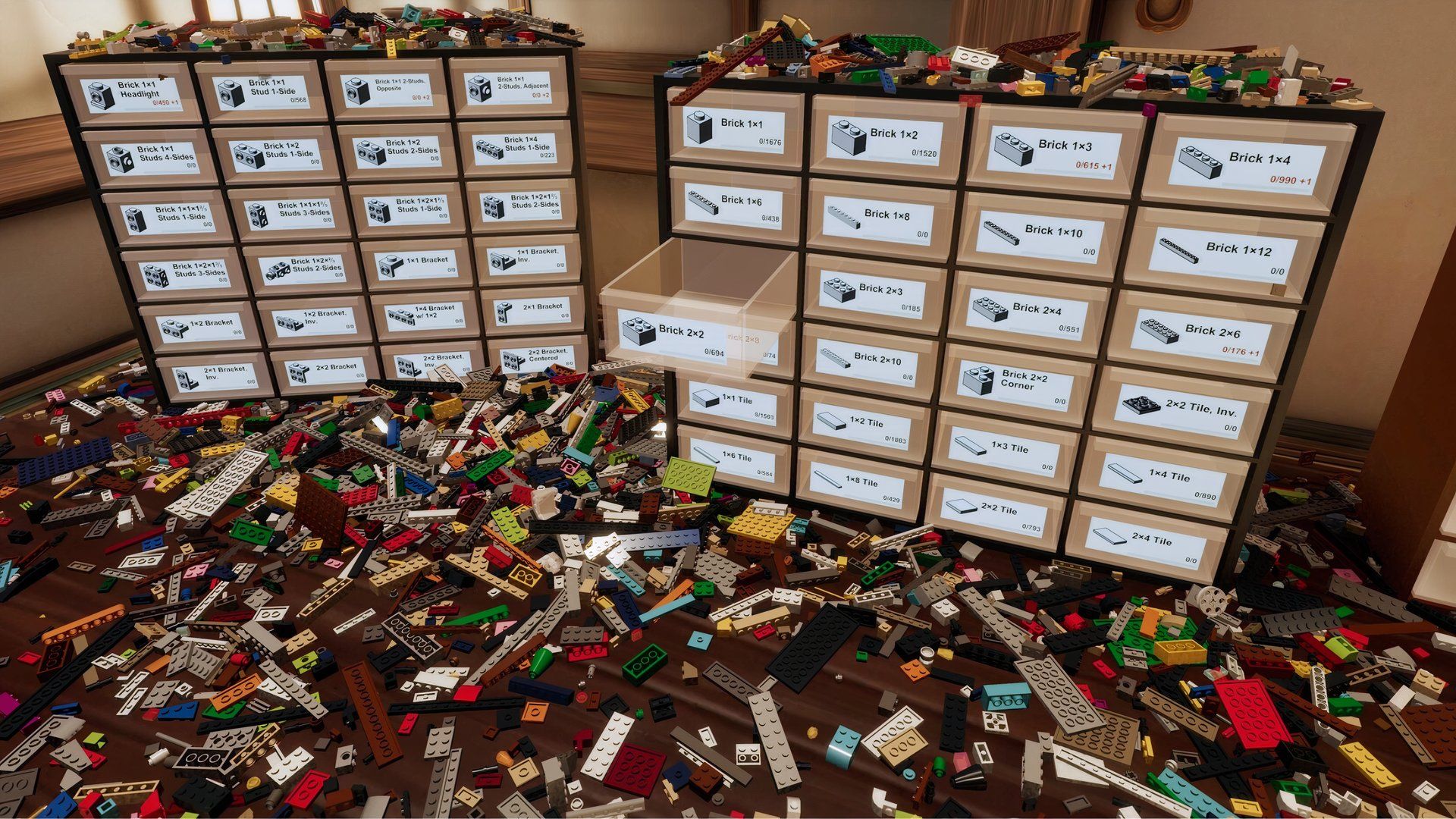
A freshly released indie game on Steam is capturing the attention of brick-building enthusiasts worldwide with its deceptively simple yet intensely addictive premise. Never Sort By Color challenges players to wade through an enormous virtual pile of LEGO-like plastic bricks containing thousands of individual pieces, sorting them with meticulous precision. For devoted collectors who have spent countless hours organizing their physical brick collections, this game represents both the ultimate fantasy and a peculiarly masochistic form of entertainment.
The game taps into something deeply psychological that many LEGO fans understand intimately: the meditative, almost therapeutic experience of organizing chaos into order. While the task might seem mundane on paper, there is an undeniable satisfaction that comes from watching a disorganized mountain of colorful bricks transform into neatly categorized containers. The developers have clearly understood this appeal, promising players a satisfying payoff upon completion that rewards their patience and dedication to the sorting process.
The Psychology Behind Brick Sorting Games
The appeal of sorting games extends far beyond simple entertainment. Psychologists have long studied the calming effects of organizational tasks, noting that repetitive sorting activities can reduce anxiety and promote mindfulness. For LEGO enthusiasts specifically, sorting bricks is often described as a form of active meditation, allowing collectors to disconnect from daily stresses while engaging in a focused, purposeful activity. Never Sort By Color capitalizes on this phenomenon, transforming what some might consider tedious work into a genuinely relaxing gaming experience. The game joins a growing category of simulation titles that find joy in everyday tasks, similar to how PowerWash Simulator turned cleaning into compelling gameplay.
The LEGO community has traditionally maintained a playful debate about the best methods for organizing brick collections. Some collectors swear by color-based sorting, while others argue that sorting by piece type or size proves more practical when building. The game’s provocative title, Never Sort By Color, appears to take a firm stance in this ongoing discussion, suggesting that perhaps the most visually obvious sorting method isn’t always the most effective approach for serious builders.
A Growing Market for Brick-Building Video Games
Never Sort By Color enters an increasingly crowded market of brick-related video games. Collectors eagerly anticipating new releases also have LEGO Skylines to look forward to, another upcoming Steam title that promises to combine the beloved building block aesthetic with city-building gameplay mechanics. The official LEGO brand has been licensing its intellectual property for video games since the 1990s, producing dozens of successful titles across multiple genres. However, indie developers have found their own niche by creating games that capture the essence of brick building without requiring official licensing, often exploring creative concepts that larger studios might overlook.
The indie game development scene has proven particularly fertile ground for unique simulation experiences. Titles like Unpacking, which turns the mundane task of moving into a new home into an emotional narrative experience, have demonstrated that players are hungry for unconventional gaming concepts. Never Sort By Color follows this tradition, recognizing that sometimes the most compelling games are those that find beauty and challenge in activities we might otherwise dismiss as ordinary chores. The game’s appearance on Steam also highlights the platform’s continued importance as a launching pad for creative independent developers seeking to reach passionate gaming communities.
Why Collectors Are Both Excited and Terrified
The dual reaction from LEGO fans—simultaneously thrilled and horrified—speaks to the complex relationship collectors have with their hobby. On one hand, the prospect of unlimited virtual bricks to sort without the physical space constraints or financial investment is genuinely appealing. On the other hand, many collectors have spent years avoiding the dreaded day when they must confront their own massive unsorted brick collections. A game that essentially gamifies this nightmare scenario hits uncomfortably close to home for enthusiasts whose spare rooms are filled with boxes of disorganized pieces waiting to be cataloged. Whether Never Sort By Color becomes a beloved classic or a title that collectors play while nervously eyeing their real-world brick storage remains to be seen, but its unique premise has certainly generated significant buzz in the building brick community.
Expert Opinion: The emergence of games like Never Sort By Color signals a broader trend in gaming toward mindful, low-stakes experiences that provide satisfaction through completion rather than competition. As the simulation genre continues to evolve, we can expect more titles that transform everyday activities into compelling gameplay loops, appealing particularly to adults seeking relaxation through familiar, organized tasks. This indie title may well inspire future developers to explore other overlooked hobbies as gaming concepts.