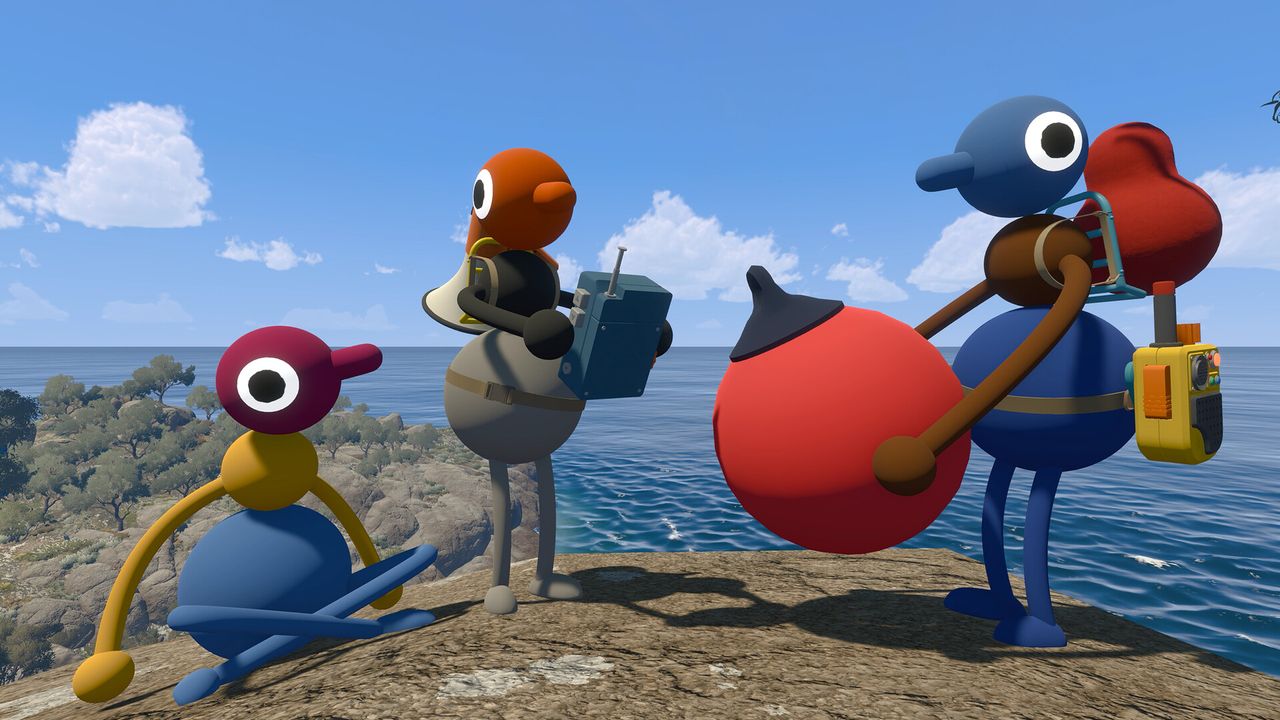
Seven years after capturing the gaming world’s attention with the unexpectedly delightful Untitled Goose Game, Australian indie developer House House has struck gold once again. Their latest release, Big Walk, has rapidly emerged as one of the highest-rated games of the year, earning near-universal praise from critics and players alike. However, unlike many studios riding the wave of a successful launch, House House isn’t rushing to announce expansion packs, sequels, or ambitious new projects. Instead, the small team behind this cooperative puzzle phenomenon is doing something increasingly rare in the gaming industry: taking a well-deserved break.
In a candid Reddit AMA session following the game’s successful launch, the developers at House House fielded numerous questions about both Big Walk’s future and the studio’s upcoming plans. While the team engaged thoughtfully with their community, the overarching message was refreshingly honest about their current state of exhaustion. “We’re not really sure what Big Walk’s future looks like – getting this far took heaps of work and a long time!” one developer wrote. “We need a good rest before we start thinking about what’s next.” This level of transparency about creative fatigue is notably uncommon in an industry often characterized by relentless development cycles and immediate pivot to the next project.
A Studio Built on Quality Over Quantity
House House has built its reputation on an unconventional approach to game development that prioritizes creative vision and team wellbeing over rapid output. Founded in Melbourne, Australia, the studio consists of just four core members who have consistently demonstrated that small teams can create globally successful games. Their 2019 breakout hit, Untitled Goose Game, became a cultural phenomenon that transcended traditional gaming audiences, spawning countless memes and introducing the concept of “horrible goose simulator” to the mainstream. The game sold millions of copies and won numerous awards, including the D.I.C.E. Award for Game of the Year and a BAFTA for Best Family Game.
The seven-year gap between Untitled Goose Game and Big Walk speaks to House House’s commitment to taking the time necessary to craft something genuinely special. In an era where many indie studios feel pressure to release content annually or face fading from public consciousness, House House has proven that patient development can yield extraordinary results. This approach mirrors other celebrated indie developers like Team Cherry, whose Hollow Knight sequel was similarly developed over many years, demonstrating that the indie gaming community often rewards patience and polish over speed.
Big Walk’s Design Philosophy and Current Value
Despite confirming that there are currently “no content plans” in development for Big Walk, House House emphasized that the game was intentionally designed with longevity in mind. The developers described their creation as built in an “unrestricted” way, offering players substantial freedom to discover interactions and create their own experiences within the game world. This design philosophy echoes the open-ended nature of Untitled Goose Game, which similarly encouraged player creativity and emergent gameplay scenarios. For those seeking extended entertainment, House House playfully suggested that players invent their own games within the experience. “We’ve had great success playing hide-and-seek amongst ourselves,” they shared. “We hope the game world is generous enough to make your own games within it.”
Priced at $20 with a current launch discount bringing it to $15, Big Walk represents remarkable value in today’s gaming landscape, where full-price releases increasingly command $70 or more. The game has been warmly embraced by critics and categorized within the emerging genre sometimes called “friendslop” – cooperative experiences specifically designed to facilitate warm, low-pressure social gaming sessions. This category has grown significantly in recent years as players increasingly seek games that bring people together rather than pit them against each other. Titles like Big Walk serve as digital social spaces where the primary goal is shared enjoyment rather than competition or completion.
The Future Remains Unwritten
What comes next for House House remains genuinely uncertain, and perhaps that’s exactly the point. In their AMA responses, the developers didn’t hint at secret projects in early development or tease potential Big Walk expansions. Instead, they presented an authentic picture of a small team that has poured years of creative energy into a single project and now needs time to recover and rediscover inspiration. This approach stands in stark contrast to the gaming industry’s typical pattern of announcing future projects during the launch window of current releases to maintain investor and consumer interest. House House’s willingness to simply say “we don’t know yet” reflects both their independence as a privately-held studio and their commitment to only creating games they’re genuinely passionate about.
The success of Big Walk demonstrates that there remains a robust market for thoughtfully crafted indie experiences, particularly those designed around cooperative play and genuine human connection. As the gaming industry continues to consolidate around massive live-service games and blockbuster franchises, studios like House House serve as important reminders that innovation and charm often emerge from the smallest teams with the clearest creative visions. Whether their next project arrives in two years or seven, players have learned to trust that House House will deliver something worth the wait.
Expert Opinion: House House’s approach reflects a growing counter-movement in indie game development where studio sustainability and creative authenticity take precedence over constant content production. Their willingness to publicly acknowledge burnout while celebrating success could inspire other small studios to adopt healthier development practices. The commercial success of Big Walk, combined with the studio’s transparent communication about needing rest, may signal a broader industry shift toward valuing quality releases over perpetual engagement models.