
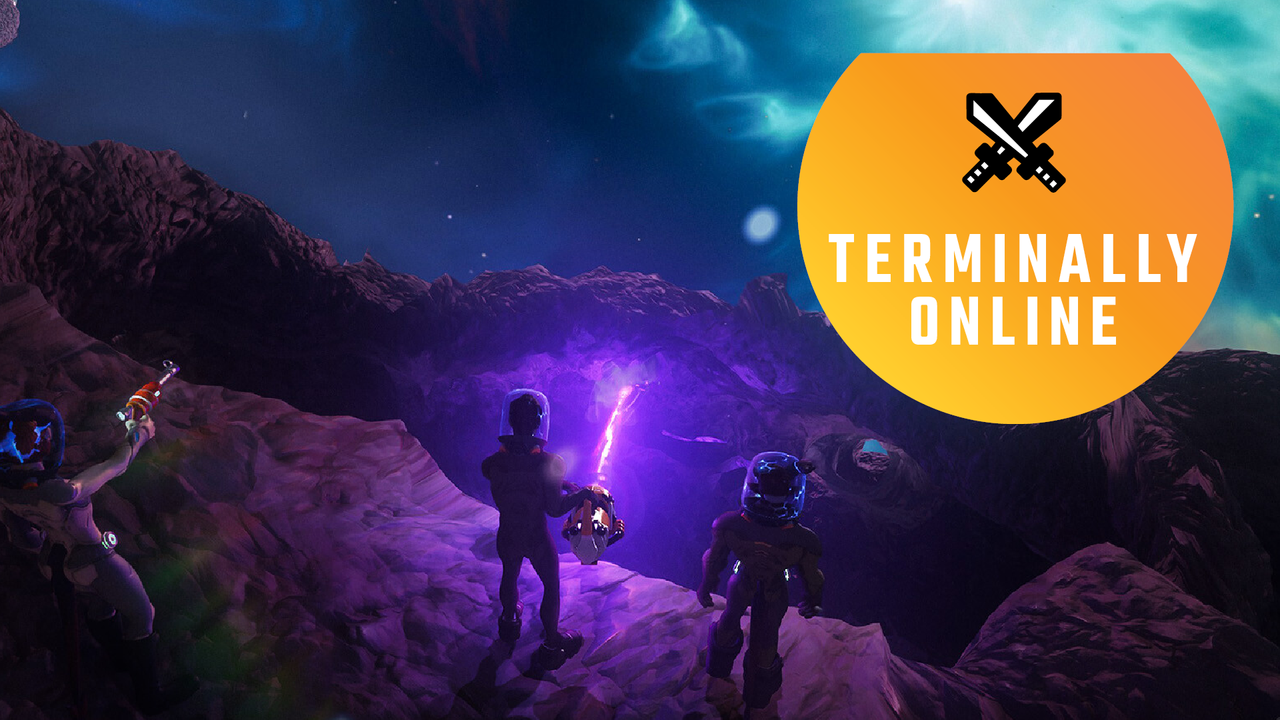
Stars Reach, the ambitious new MMO from legendary developer Raph Koster, launched into early access this week with a price tag of nearly $30, and my initial reaction was one of profound disappointment. The game, which attempts to recapture the magic of Star Wars Galaxies — a beloved sandbox MMO that Koster helped create over two decades ago — makes what can only be described as a terrible first impression. The tutorial is clunky, the user interface feels unfinished, and the core gameplay mechanics range from intriguing to deeply underwhelming. Yet just when I was ready to write the whole thing off, I stumbled upon something that reminded me why social sandbox MMOs can be so special.
Koster’s pedigree in the MMO space is undeniable. His work on Ultima Online in the late 1990s helped establish many conventions that persist in online games today, and Star Wars Galaxies — despite its controversial history — remains one of the most ambitious attempts at creating a living, breathing virtual society. SWG allowed players to become dancers, musicians, politicians, and crafters with the same viability as combat-focused characters. Stars Reach clearly aims to recapture that lightning in a bottle, positioning itself as a socially-driven experience where being a journalist or an actor is just as valid a playstyle as shooting aliens.
A Rocky Start in the Cosmos
The game begins by dropping you into a tutorial zone where you learn to use your basic tools: a terraformer, a scanner, a harvester, a gun, and a grappling hook that handles about as smoothly as a shopping cart with a broken wheel. The terraformer stands out as genuinely innovative — it allows players to dig into fully malleable terrain and manipulate the landscape in meaningful ways. The physics simulation powering this system is impressive; sandy terrain behaves differently than rock, with excavated holes filling back in as nearby hills collapse into them. Unfortunately, this sophistication highlights the game’s unfinished state. When I tried to complete a simple mining mission, I discovered that skill tree upgrades for mining speed were locked behind “Work In Progress” labels.
This pattern repeats throughout Stars Reach. The most interesting skill trees — acting, dancing, politics, and journalism — are still under construction. After the tutorial, players are deposited onto a bland space station and pointed toward randomly-generated missions that feel lifeless and repetitive. Want to explore other planets? You’ll need to float through empty space in your suit, as spaceships haven’t been implemented yet. The planets you do find are often abandoned, their player-created content having expired due to lack of maintenance. For a game charging premium early access prices, this feels like a significant overpromise.
Finding the Heart of the Game
I was genuinely ready to abandon Stars Reach with a dismissive verdict when memories of pre-release interviews with Koster surfaced. He had spoken enthusiastically about the communities that formed during playtesting, and I wondered if perhaps I was missing something. Diving into the game’s Discord server, I discovered a fan-made website for an organization called the Galactic Union of Natural Conservation — or GUNC, as they cheekily call themselves. Following their coordinates to a specific planet changed my entire perspective on what Stars Reach could become.
Upon arrival, I witnessed something remarkable: approximately a dozen players working together around stacks of supply crates, coordinating a massive logistics operation to rebuild the community they had established during earlier testing phases. They were ferrying resources from distant planets, allocating tasks, and laying the groundwork for a functioning society. The group had already elected a mayor using the game’s GovBot system — a governance tool that works despite the politics skill tree being incomplete. Their mission? Protecting the game’s wildlife by locating invisible creatures called Makers that spawn animals, then claiming the surrounding territory through proper bureaucratic channels.
When Systems Create Stories
What struck me most was how the incomplete systems still enabled meaningful emergent gameplay. GUNC needed trained xenobiologists to track down Makers, politicians to manage territorial claims, and logistics experts to coordinate supply chains. I noticed players wearing matching “hive glasses” — a fashion item being supplied by the community’s designated tailor, another player who had invested their time into crafting rather than combat. An ex-anarchist roleplayer chatted about their character’s redemption arc while a newcomer politely asked where they could set up camp without interfering with zoning regulations.
The contrast between my initial experience and this vibrant community gathering felt like playing two entirely different games. One was a lonely, aimless mission generator that felt abandoned before it even launched. The other was a cooperative sandbox filled with players genuinely invested in building something together. The problem is that Stars Reach does nothing to connect new players with these community hubs. I had to dig through Discord servers and third-party websites to find GUNC — the game itself actively directed me toward its worst content rather than its best.
A Vision Still Taking Shape
Stars Reach represents a fascinating contradiction in modern game development. Its underlying systems clearly have the potential to enable the kind of emergent, player-driven experiences that made games like Star Wars Galaxies and EVE Online legendary. The terrain manipulation, the governance tools, the diverse skill trees — these aren’t just features on a checklist but interconnected systems designed to create a functioning virtual society. Yet the execution falls dramatically short of the vision, and charging $30 for access to something this incomplete feels like asking players to pay full price for a promise.
The game desperately needs to funnel new players toward community content rather than randomly-generated fetch quests. It needs to communicate its social focus from the very first moment, not bury it beneath layers of unfinished mechanics and empty planets. Koster and his team at Playable Worlds have published a detailed roadmap, and their passion for the project is evident. But right now, Stars Reach asks players to squint past too many rough edges to see the diamond potentially forming underneath. For the sake of dedicated communities like GUNC who clearly believe in this vision, I hope the developers can deliver. The idealized version of Stars Reach could be something special — but that version exists only in roadmaps and imagination, not yet in the game itself.
Expert Opinion: Social sandbox MMOs like Stars Reach face an inherent chicken-and-egg problem: they need established communities to demonstrate their potential, but building those communities requires a critical mass of engaged players willing to endure early jank. If Playable Worlds can implement better social discovery tools and complete core skill trees within the next six months, Stars Reach could carve out a devoted niche audience. However, the current $30 price point creates a significant barrier that may prevent the game from reaching the population density its systems require to truly shine.


