
In the interconnected world of classic first-person shooter development, few relationships are as significant as that between Quake and Half-Life. Students of gaming history will recall that Half-Life’s legendary GoldSrc engine was built upon a heavily modified version of id Software’s Quake engine, representing one of many branches stemming from id-tech’s foundational technological tree. This lineage runs so deep that tiny fragments of original Quake code can still be found in Valve’s modern Source 2 engine, a testament to the enduring influence of those pioneering development efforts from the mid-1990s.
Key Points
- Libre-life ports Half-Life weapons, monsters, and mechanics to modern Quake sourceports, targeting the Zircon Engine for expanded capabilities
- The project bypasses GoldSrc’s hard-coded limitations on map sizes and enables cross-engine compatibility with Quake 1 and Quake 3 brush formats
- Creator KleskBY claims anti-AI sentiment is orchestrated by the Chinese government and domestic terrorists, presenting no evidence for these assertions
- The Diffusion mod faced similar AI criticism but replaced AI voice acting with human performers after community feedback
- All Half-Life 1 weapons have been reimplemented, with demo footage showing recognizable gameplay despite different shadow and decal rendering
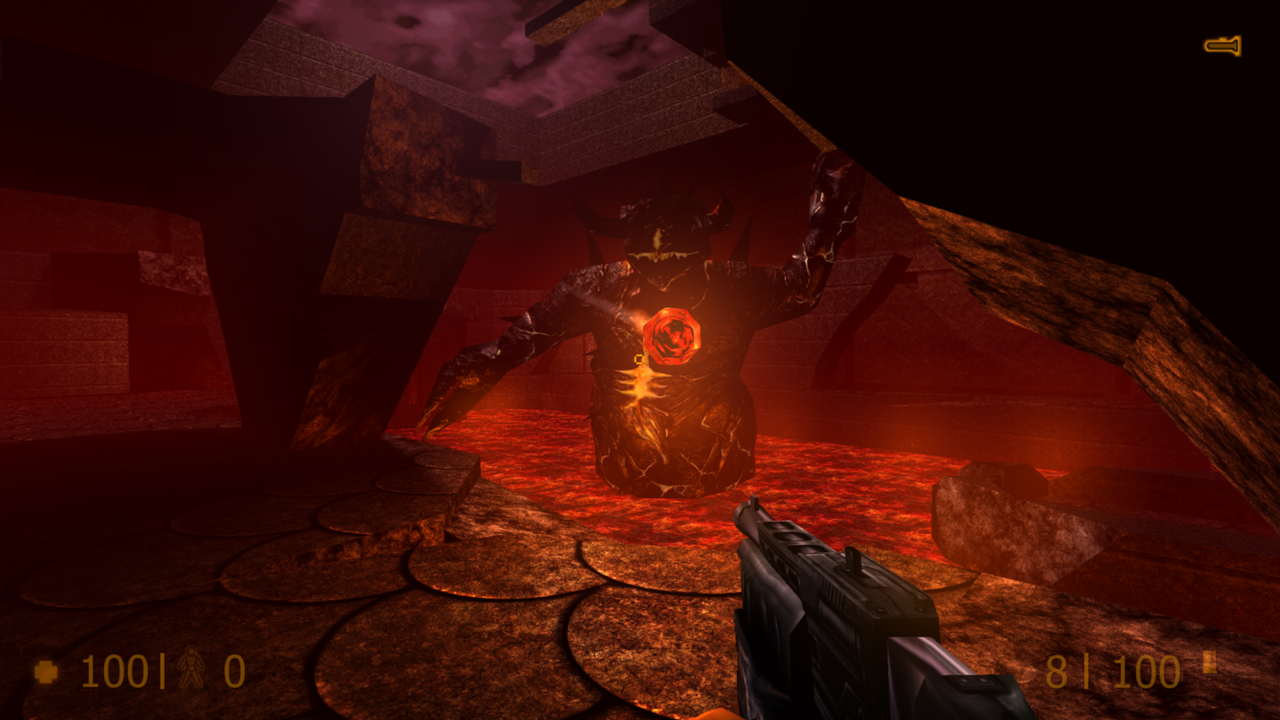
Now, nearly three decades after Half-Life’s groundbreaking 1998 release, a modder has embarked on an ambitious project to bring these two legendary franchises full circle. The project, called Libre-life, is a total conversion modification that aims to port Half-Life’s essential assets—including entities, weapons, monsters, and gameplay mechanics—into Quake sourceports derived from DarkPlaces and FTEQW engines, with the primary target being the Zircon Engine. The creator, known as KleskBY, describes the goal as combining support for Half-Life, Quake 1, and Quake 3 brush entities into a unified standard.
Why Port Half-Life Back to Quake?
The reasoning behind Libre-life extends beyond mere nostalgia or technical curiosity. Legacy game engines like GoldSrc contain hard-coded limitations that can significantly impact their capabilities, including restrictions on maximum map sizes and other fundamental constraints. The modern solution to these limitations comes through sourceports—reimplementations of game engines that remove these barriers while maintaining compatibility with original content. Projects like GZDoom for Doom 2, or QuakeSpasm and its fork Ironwail for Quake, have enabled ambitious modifications like Brutal Doom and Arcane Dimensions that would have been impossible under the original engine constraints.
Half-Life already possesses such a sourceport in Xash3D, a well-established reimplementation that has served the modding community for years. However, KleskBY cites several reasons for pursuing Libre-life rather than building upon existing Half-Life infrastructure. The modder emphasizes that Libre-life is designed to be more than a straightforward engine port, noting that it can run on multiple Quake engines and could potentially operate on Xash with sufficient adaptation work. “There is no need for the project to be locked to a single Half-Life based engine,” Klesk explains, adding that Xash’s Half-Life reimplementation is “not technically superior” and that the targeted Quake sourceports offer capabilities that Xash lacks.
What Libre-life Has Achieved So Far
| Feature | GoldSrc/Xash3D | Quake Sourceports (Target) |
|---|---|---|
| Map Size Limits | Hard-coded restrictions | Removed in modern ports |
| Multi-Engine Support | Single engine locked | Runs on DarkPlaces, FTEQW, Zircon |
| Brush Entity Support | Half-Life only | Half-Life + Quake 1 + Quake 3 |
Libre-life remains in its early developmental stages, but substantial progress has already been demonstrated. All of Half-Life 1’s weapons have been reimplemented, and video footage showcasing the current state of the project reveals a recognizable Half-Life experience running within the Quake framework. Observers have noted that while the core gameplay looks and sounds authentically like Half-Life, certain visual differences are apparent, including higher-contrast shadows and softer blood decal effects that reflect the different rendering approaches of the target engines.
The technical achievement represented by Libre-life is genuinely impressive, demonstrating the modder’s deep understanding of both engines’ architectures. The project has attracted attention from enthusiasts interested in the preservation and evolution of classic gaming technology, particularly those who appreciate the historical connections between these influential titles. Such cross-engine projects serve not only as technical exercises but also as valuable educational resources for understanding how game engine development has evolved over decades.
Creator's AI Defense Devolves Into Conspiracy Claims
However, the positive reception surrounding Libre-life took an unexpected turn when curious observers investigated the project more closely. In an FAQ document accompanying the demo release, KleskBY states unambiguously that AI is used “a lot” in the project’s development, adding a pointed message to critics: “If you are anti-AI please just close this tab and move your focus to XashXT/FreeHL.” While the use of generative AI tools in game development has become an increasingly contentious topic, it was the modder’s subsequent comments that truly raised eyebrows throughout the gaming community.
KleskBY’s FAQ continues with a remarkable claim: “The Anti AI movement is just a hypocrisy and it does not provide any real solution. My opinion is that Anti-AI rhetoric is influenced by Chinese government and domestic terrorists who are competitors aiming to advance in AI development, as they never provide a solution, only complaints.” This conspiracy theory, presented without evidence, has left many community members bewildered and has significantly dampened enthusiasm for what otherwise appeared to be an impressive technical achievement.
Critics of generative AI point to numerous legitimate concerns that have nothing to do with foreign governments or terrorism. These include the technology’s foundation on copyrighted works used without permission or compensation, its substantial environmental impact due to enormous energy requirements, its contribution to inflated PC hardware prices, and its documented negative effects on creative industries and employment. The suggestion that such criticism stems from conspiracy rather than genuine ethical and practical concerns has been widely dismissed by observers familiar with the ongoing debates surrounding AI technology in creative fields.
The Diffusion Mod Shows a Different Approach to AI Criticism
The controversy surrounding Libre-life stands in stark contrast to how other recent Half-Life projects have handled similar criticism. Diffusion, a total conversion modification that was coincidentally built using Xash3D, initially employed generative AI for its voice acting. When the community expressed concerns about this approach, creator Aynekko responded constructively, ultimately replacing the AI-generated voices with performances from human actors. This decision was met with widespread approval from fans, demonstrating that developers can engage thoughtfully with community feedback on AI usage rather than dismissing critics with unfounded conspiracy theories.
The differing responses highlight an ongoing tension within gaming communities regarding the role of AI tools in creative projects. While some developers view AI as simply another tool in their arsenal, others in the community express concerns about the implications for human artists, voice actors, and other creative professionals whose work may be devalued or replaced by AI-generated content. The debate shows no signs of resolution, and projects like Libre-life that take confrontational stances risk alienating potential supporters who might otherwise appreciate their technical merits.
For now, Libre-life remains an intriguing technical experiment overshadowed by its creator’s controversial views. The project demonstrates that the ancient code connecting Quake and Half-Life continues to inspire new explorations decades after both games’ releases. Whether the modding community will embrace Libre-life despite—or perhaps simply ignore—its creator’s conspiracy theories remains to be seen, but the controversy serves as a reminder that technical skill alone does not guarantee community support in an era of increasingly complex ethical debates surrounding game development tools and practices.
Why This Project Matters — And Why It's Controversial
The technical achievement behind Libre-life deserves recognition. Porting Half-Life’s systems to Quake sourceports isn’t trivial work — it requires deep understanding of both engine architectures and years of accumulated modding knowledge. The project represents a fascinating inversion of gaming history, sending Half-Life back to its ancestral engine family with modern enhancements.
The creator’s response to AI criticism, however, has overshadowed the technical work. Legitimate concerns about generative AI — copyright issues with training data, energy consumption, hardware price inflation, and displacement of creative workers — exist independently of any government or terrorist influence. Dismissing critics with conspiracy theories rather than engaging with their actual arguments alienates potential collaborators and supporters.
The contrast with Diffusion’s approach is instructive. That project’s creator listened to community feedback and made changes, earning goodwill. Libre-life’s confrontational stance may limit its adoption regardless of technical merit. For preservation-focused communities, the debate over AI tools in modding will likely intensify as these projects multiply.
Common Questions
What is Libre-life and how does it relate to Half-Life?
Libre-life is a total conversion mod that ports Half-Life’s weapons, monsters, entities, and gameplay mechanics to modern Quake sourceports. Since Half-Life’s GoldSrc engine was originally built on modified Quake code, this effectively brings the game back to its technological roots while removing legacy engine limitations.
Why not just use Xash3D for Half-Life modding?
The creator argues that Quake sourceports like Zircon offer capabilities Xash3D lacks, including support for multiple engine formats and fewer hard-coded restrictions. Libre-life can also potentially run across multiple Quake-derived engines rather than being locked to a single platform.
What AI tools are used in Libre-life's development?
The creator states AI is used a lot in the project but hasn’t specified exactly which tools or for what purposes. This admission, combined with dismissive responses to critics, has generated significant controversy in the modding community.
Expert Opinion: The Libre-life controversy exemplifies a growing schism in the modding community between technical innovation and ethical considerations surrounding AI usage. As generative AI tools become more accessible to independent developers, we can expect similar debates to intensify, potentially leading to community-driven standards or guidelines for AI disclosure in fan projects. The modders who navigate these waters most successfully will likely be those who, like Diffusion’s creator, demonstrate willingness to engage constructively with community concerns rather than dismissing criticism through inflammatory rhetoric.