In an era dominated by competitive multiplayer experiences and high-stakes survival games, developer House House has crafted something refreshingly different with Big Walk. This cooperative-only puzzle adventure, set to release on August 4, 2026, drops players onto a mysterious island where success depends entirely on teamwork, creativity, and an almost telepathic understanding between friends. Priced at $20, this first-person experience from the creators behind the viral sensation Untitled Goose Game represents a bold step into uncharted territory for the Australian studio, and the results are nothing short of remarkable.
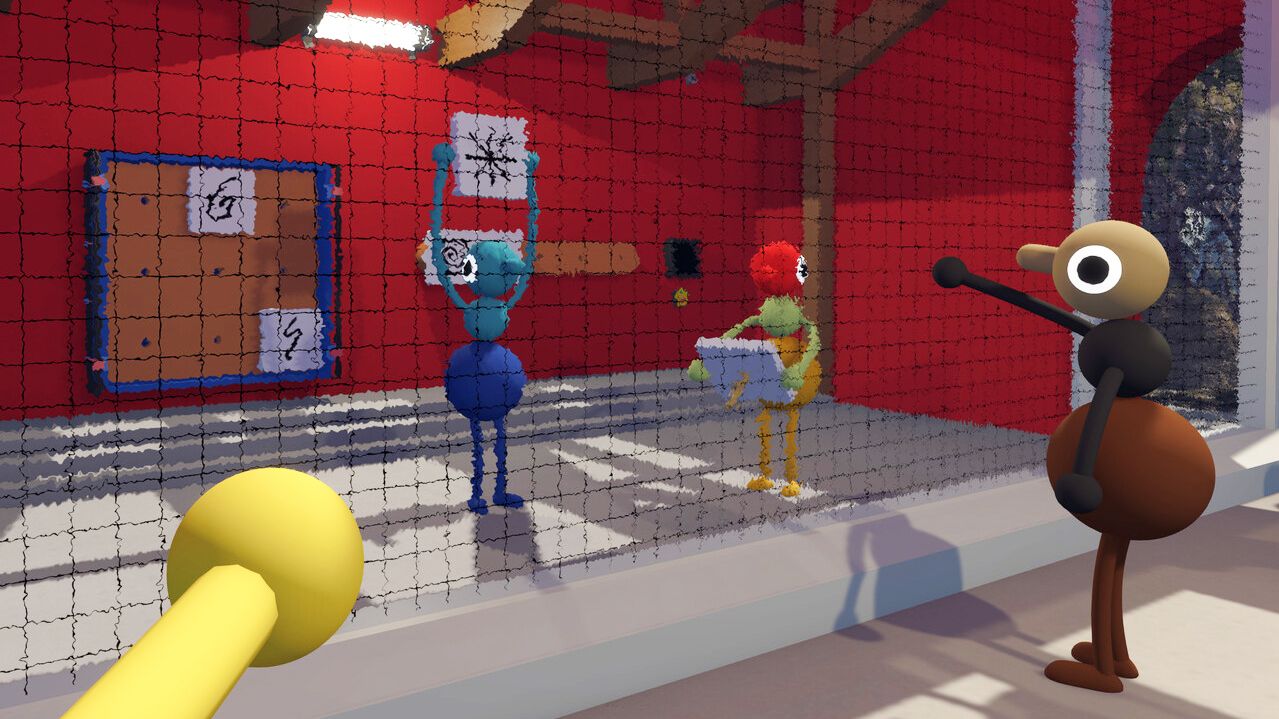
The premise is deceptively simple: you and your friends explore a sprawling island filled with puzzles that require genuine cooperation to solve. But what sets Big Walk apart from other cooperative titles is its masterful approach to communication. Behind soundproof glass walls, players must rely on gestures, body language, and improvised signals to convey complex information. A simple arm wave might mean “wrong piece” in one context and “eureka, I found it” in another. The beauty lies in how naturally these communication systems develop between players, creating a shared language that feels organic rather than forced.
A World Without Pressure
House House has built a reputation for creating games that subvert expectations, and Big Walk continues this tradition admirably. The studio, founded in Melbourne, Australia, previously captivated millions with Untitled Goose Game in 2019, a title that proved simple concepts executed brilliantly could resonate with mainstream audiences. With Big Walk, they’ve applied that same philosophy to cooperative gameplay, stripping away the stress and urgency that typically defines multiplayer experiences in favor of something more meditative and meaningful.
The tutorial zone exemplifies this relaxed approach perfectly. Players learn basic mechanics like jumping, crouching, and object manipulation, but there’s no fanfare when training concludes. No arrows point toward the next objective, no timer counts down. Instead, players naturally drift away from the starting area and discover the vast island awaiting exploration. This design philosophy extends throughout the entire experience, creating an atmosphere where curiosity becomes the primary motivator rather than external pressure or artificial urgency.
Limitations That Liberate
What makes Big Walk particularly innovative is how it uses restrictions to enhance rather than hinder the experience. Night cycles plunge the island into genuine darkness, far deeper than typical survival games dare venture. Players can carry only one object at a time, and even equipping a backpack requires assistance from a teammate. This isn’t frustrating limitation for its own sake—it’s thoughtful design that reinforces the game’s core message about interdependence and mutual support.
The proximity-based voice chat system deserves special attention. Conversations only work within roughly twelve yards of other players. Beyond that range, walkie-talkies become necessary for communication—but carrying a radio means sacrificing valuable inventory space for puzzle-solving items. These trade-offs create meaningful decisions that force teams to think strategically about positioning and resource allocation. Publisher Panic, known for supporting unconventional indie titles like Firewatch and Playdate, clearly recognized the potential in House House’s vision of a game that treats cooperation as its fundamental mechanic rather than an optional feature.
Puzzles That Evolve
Initial concerns about puzzle variety prove largely unfounded despite early signs of repetition. Yes, players encounter familiar elements—symbols, buttons, soundproof doors—throughout their journey. However, House House demonstrates remarkable creativity in remixing these components into increasingly complex configurations. A puzzle requiring verbal symbol description might evolve into a telephone-style chain where information passes through multiple players, each adding potential for miscommunication.
This evolutionary approach to puzzle design serves a deeper purpose beyond maintaining engagement. Each iteration teaches players to refine their communication methods, building unconscious shorthand that proves invaluable later. The game essentially trains players in non-verbal communication without explicitly acknowledging it’s doing so. By the time teams reach the challenging finale, they’ve developed sophisticated signaling systems they never consciously created, leading to moments of genuine triumph when complex puzzles fall to perfectly synchronized teamwork.
The Joy of Shared Experience
Beyond its puzzle mechanics, Big Walk succeeds as simply a wonderful place to exist with friends. The absence of death, jumpscares, or monsters creates a safe space for experimentation and play. Impromptu dance parties break out. Players toss objects back and forth in casual games of catch. The worst consequence for failure is brief stunning after a cliff tumble or accidentally kicking important equipment into dense foliage—minor setbacks that inspire laughter rather than frustration.
The game supports up to twelve players, making it ideal for larger friend groups seeking shared experiences. Steam Deck verification ensures portable play remains an option for those who prefer gaming on the go. The twelve-hour campaign length hits a sweet spot—long enough to develop deep communication systems with teammates, short enough to complete in a few dedicated sessions without overstaying its welcome. House House has crafted an experience that celebrates human connection in an industry often criticized for fostering isolation.
Big Walk represents cooperative gaming at its finest, proving that meaningful multiplayer experiences don’t require competition or conflict. It’s a game about listening, adapting, and trusting the people beside you—lessons that extend far beyond the digital island where they’re learned. For anyone seeking a refreshing alternative to conventional multiplayer fare, this charming puzzle adventure deserves immediate attention when it launches next August.
Expert Opinion: Big Walk signals a potential shift in cooperative game design philosophy, demonstrating that restrictions and limitations can create deeper engagement than endless freedom. House House’s approach of teaching communication through gameplay rather than tutorials could influence future cooperative titles significantly. Expect this release to spark industry conversations about how multiplayer games can foster genuine human connection rather than simply providing shared spaces for individual experiences.