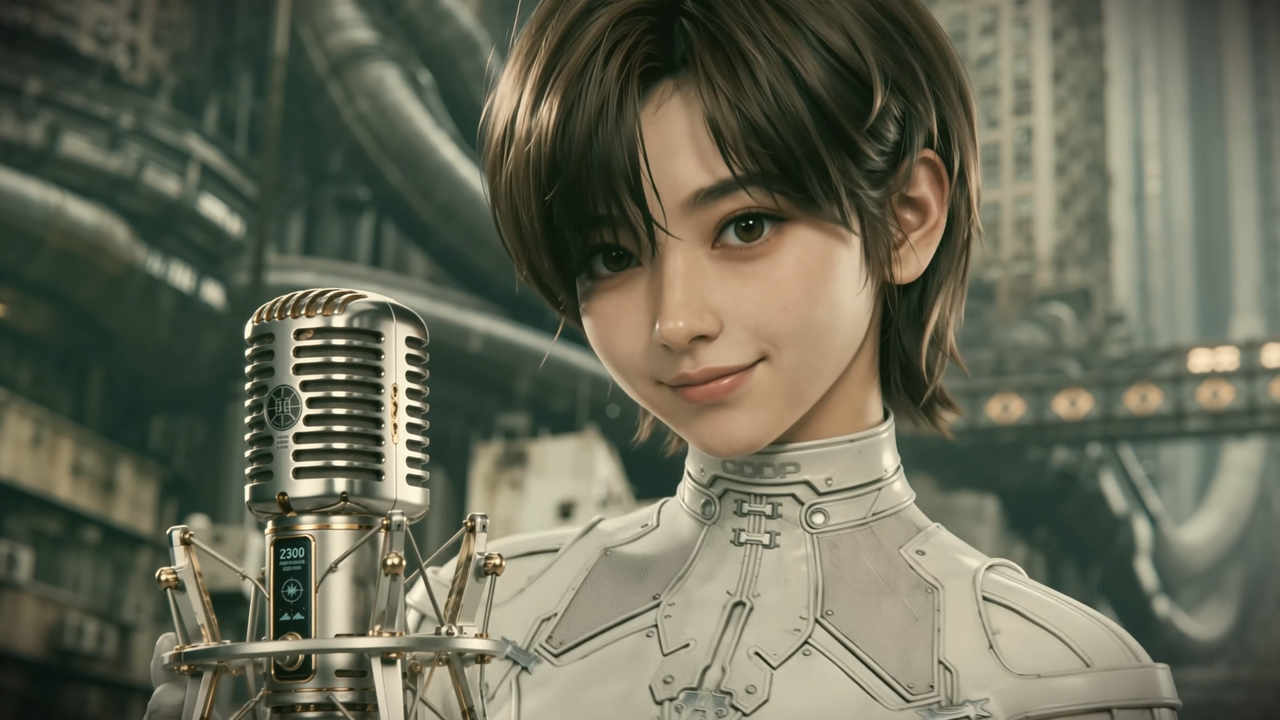
The gaming community erupted in controversy last week when developer ShiftUp released a promotional music video for its highly anticipated sequel Stellar Blade: Blood Rain. The video, which was meant to generate excitement for the upcoming game, instead sparked widespread criticism for its heavy reliance on generative AI technology. From the protagonist Evie’s unsettling expressions to a song featuring unmistakably robotic vocals, viewers quickly identified the telltale signs of AI-generated content throughout the production. The backlash was swift and fierce, with fans and industry observers questioning why a financially successful studio would resort to such methods for a major marketing campaign.
The criticism is particularly pointed given ShiftUp’s proven financial success. The company’s mobile game Nikke: Goddess of Victory consistently ranks among the highest-grossing gacha games globally, reportedly generating hundreds of millions of dollars in revenue. This financial cushion makes the decision to use AI-generated content even more puzzling to observers, who argue that the studio clearly has the resources to produce traditional, human-crafted marketing materials. The disconnect between the company’s apparent wealth and its choice to deploy AI tools has become a central point of contention in the ongoing debate.
CEO’s Defense Misses the Mark
ShiftUp CEO Hyung Tae Kim attempted to quell the controversy with a public statement on social media, but his defense appears to have missed the fundamental issue driving fan frustration. In his tweet, Kim emphasized that the character Evie “was created from head to toe by our talented artists and modelers through more than a year of dedicated work.” He further clarified that “the AI is not creating her from scratch. It is rendering and presenting the character based on the data, design, and craftsmanship our team created.” Kim concluded by asking fans to “view the work with that understanding in mind.”
However, critics were quick to point out that no one was actually accusing ShiftUp of using AI to design Evie’s character. The original Stellar Blade, released in 2024, was widely praised for its stunning character design and meticulous artistic craftsmanship. The problem, as many have articulated, lies in virtually everything else within the promotional video. Viewers noted that portions of Evie’s suit appeared to morph and distort unnaturally between frames, food items displayed the characteristic “AI slime” effect that has become synonymous with generative imagery, and text on signs and vending machines devolved into meaningless garbled symbols—all hallmarks of AI-generated visuals that have become increasingly recognizable to tech-savvy audiences.
The Broader AI Controversy in Gaming
The controversy surrounding ShiftUp’s marketing video reflects a much larger tension within the gaming industry regarding the use of artificial intelligence in creative processes. As AI tools have become more sophisticated and accessible, studios worldwide have begun experimenting with their integration into various aspects of game development and marketing. However, many players and industry professionals have pushed back against what they perceive as a devaluation of human creativity and craftsmanship. The gaming community has historically prided itself on celebrating artistic achievement, making AI-generated content particularly contentious in this space.
What makes this situation especially frustrating for critics is that ShiftUp employs genuinely talented composers and artists who could have created a compelling marketing piece without AI assistance. The original Stellar Blade soundtrack received widespread acclaim, demonstrating the studio’s capacity for high-quality musical production. The decision to generate an AI song for Blood Rain’s promotional video, complete with its uncanny robotic vocals, struck many as unnecessarily cost-cutting at the expense of artistic integrity. For a sequel to a game that succeeded largely on the strength of its aesthetic presentation, the choice seemed counterproductive to building anticipation.
South Korea’s AI Embrace and Industry Implications
Understanding ShiftUp’s approach requires examining the broader technological landscape in South Korea. The country has emerged as one of the world’s most enthusiastic adopters of AI technology, with government initiatives actively encouraging its integration across industries. This cultural embrace of AI has inevitably influenced Korean game development studios, many of which have begun incorporating AI tools into their workflows. CEO Hyung Tae Kim himself has reportedly been an advocate for AI technology since around 2022, despite his own considerable talents as an artist—a background that makes his enthusiasm for AI-assisted creation all the more notable to observers.
The implications for the future of gaming marketing and development remain uncertain. While AI technology continues to advance and may eventually produce content indistinguishable from human creation, current implementations remain firmly in the “uncanny valley” that alienates viewers. For studios like ShiftUp, the calculation between cost savings and audience reception will likely determine future strategies. The Blood Rain video’s negative reception may serve as a cautionary tale, but given the broader industry trends and South Korea’s technological enthusiasm, it seems unlikely to be the last AI-generated gaming content that sparks controversy. Whether studios will learn from this backlash or continue down the path of AI integration remains to be seen as the technology and public attitudes continue to evolve.
Expert Opinion: This controversy highlights a critical miscalculation many game studios are making in the AI era—conflating efficiency with quality in consumer-facing content. While AI tools may have legitimate applications in internal development processes, using them for marketing materials signals to audiences that the company prioritizes cost-cutting over craftsmanship. Studios with established reputations for artistic excellence, like ShiftUp, risk significant brand damage by deploying visibly AI-generated content, potentially undermining consumer confidence in the final product itself.